|
|
||||||||||
|
|
||||||||||
Introduction.
|
||||||||||
|
|
||||||||||
|
The essence of tactical play
is possession of the T. This, of-course, should not come about by using the
body to obstruct, push, and shove. On the contrary, control of the T comes
about by clear, sound thinking, precision, racket skills, speed, and more.
Before going on to explore these arguments, some erroneous ideas must be
explained and put aside. |
||||||||||
|
|
||||||||||
|
Many less experienced players
believe that the main objective in this game is to put the ball away and make
it bounce twice before the opponent gets there. It is a big mistake to have
this in mind as the main and primary objective. Playing squash with such a
philosophy will lead the player into attempting shots well beyond his own
capabilities, often giving the ball to the adversary, making many mistakes,
and losing. |
||||||||||
|
|
||||||||||
|
How very true? If a player
keeps hitting the nick in the front corners, he would demolish his adversary.
But, how realistic is that? This perception of the game is extremely short
sighted. In order to demonstrate how wrong this line of thinking is, imagine
the inexperienced boxing viewer. He may think, “it all comes down to
producing the big right punch, other guy on the floor, no sweat”!! Of-course,
this could apply when one boxer is much bigger, more powerful, and with a
“BIG” reputation. Remember how Tyson’s punches used to hurt even when he
missed?! |
||||||||||
|
|
||||||||||
|
However, this is not the
norm. Usually fights are well balanced and the best tactics are seen in close
matches. You will have seen how boxers try to dominate the centre of the
ring. How they work the rival with the jab and weaken him with body punches
too. Combinations, and deceptive body and arm movements keep the receiver
guessing, and defensive. Only then, does the clever boxer look for the really
big punch. |
||||||||||
|
|
||||||||||
|
Understanding squash tactics
well is easy if parallels are drawn. The only real difference, of-course, is
that you do not directly hit the other person! The blows the opponent
receives are those that you inflict on the ball. Dominating the centre is
key. The opponent is made to run until he hurts physically and mentally. You
attack the rival with effective, guaranteed (as opposed to risky) shots,
which will wear him down. Your choice of shot, should not leave you
exposed to counter attacks, but rather give you clues as to what his choices
of response could be. In doing so, you are thinking one shot ahead and can
plan the rally without momentarily giving up the hold on your prey. |
||||||||||
|
|
||||||||||
|
If all this seems
complicated, do not worry. Each aspect will be discussed, step-by-step. Other
concepts will also be explained. In the end, gradual application of all these
theoretical ideas will render them second nature. |
||||||||||
|
|
||||||||||
|
Be On the T Before the Opponent is on
Your Shot |
||||||||||
|
|
||||||||||
|
A coach
could never overemphasise the importance of dominating the centre of the
court, or the T, as it better known to squash players. Those who are
tactically clever, retain the T as their primary and most important
objective. With the right choice of shot, they are able to remain in the centre
of the court, more often, and for a greater time duration, in comparison to
the other player. Experienced players will also insist on using the correct
shot, hit at the right speed in order to get to the T before the opponent is
on their shot.. In doing so, their chances of being out-positioned are
minimal. In this first |
||||||||||
|
|
||||||||||
|
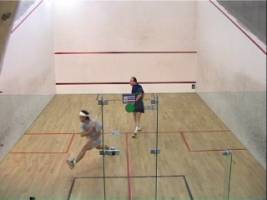
Vice versa, a player who
strives to be onto his opponent’s shot before the latter is on the T, gains a
huge advantage. In this video clip, see how the player in the dark shirt
moves in early and occasionally volleys before his opponent has returned to
the ideal spot. Eventually, the opponent is very late, over-stretched, and
makes a loose return. Consequently, the attacker has created an opening and
puts the ball away. |
||||||||||
|
|
||||||||||
|
In conclusion, even being
slightly late to the T is dangerous, because after a succession of shots, the
delay will be magnified and become critical. (Unless your opponent neglects
taking advantage of the situation.) On the other hand, keep in mind this
important objective of being on the ball before your rival is on the T. Work
your opponent to make this advantage bigger and create an opening. Even if
you don’t manage to conclude the rally with a “winner”, the player on the
receiving end has been made to work hard and you have gained the upper hand
in the long term. |
||||||||||
|
|
||||||||||
|
|
|
|
|
|||||||
|
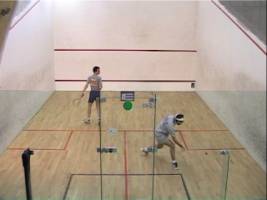
The player at the frontcourt
has just hit a short cross-court allowing his opponent to strike the ball
before he could reach the T. Was the
poor cross-court due to bad choice, or incorrect execution? |
|
|
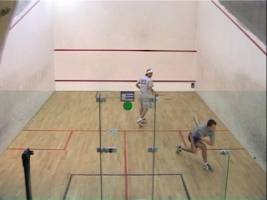
The player at the frontcourt
has just hit a deep power drive. By the time the opponent is positioned onto
the ball, he will be comfortably on the T. |
|||||||
|
|
||||||||||
|
|
||||||||||
|
|
||||||||||
|
|
||||||||||
|
|
||||||||||
|
This section has many
elements in common with the concepts explained above. However, more ideas
will be introduced, together with a more detailed and specific coverage
of game situations. |
||||||||||
|
|
||||||||||
|
“ as good as your preceding long shots.” |
||||||||||
|
|
||||||||||
|
Use this as a rule, in order
to avoid going for the short shot too early, or when the retriever is
expecting it. This rule implies that if you have played effective long shots
and managed to hold the adversary to the backcourt, your frontcourt shot will
be effective. In other words, by adhering to this rule, even when a drop shot
is not perfect, but played at the right instant, the retriever still has to
make a big effort and you maintain control of the rally. Needless to say, if
the short shot goes in well, a probable winner would be the result. It may look surprising how
the player in the light shirt moves in so late. Though, seen within the
context of the previous rallies, (not shown here) his reaction is quite
normal. He had been under constant attack for the last few minutes and pinned
to the backcourt. With his weight onto the back foot, he was no longer ready
to move quickly forward. The beauty of this is that when your short shots
start to create problems for the opponent, your long shots will become even
more penetrating. A virtuous circle is hence created. |
||||||||||
|
|
||||||||||
|
|
|
|
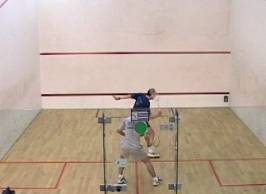
In this situation too, the
player in the dark shirt is about to play a drop-shot. The opponent though,
is not quite sure. This is evident from his hesitation to position himself
further forward on the T. The fact is, he has been
pressured mostly to the back during preceding rallies and is anxious about
receiving the same treatment. From this position he has a greater chance of
reaching the deep shots. He may
feel more |
|||||||
|
secure standing there
believing that hopefully the next shot will be long. If it is, and he responds with a good
length and steps well forward, then his compromised position (photo) did
help. If however, the next shot is a drop (most probable), then his anxious
calculations have landed him into greater trouble. |
||||||||||
|
|
||||||||||
|
court shots are too few, too short and not tight enough, once you execute
the drop shot, for example, the opponent will be well positioned and quick to
the front. He is minimally worried about being pressured to the back.
Instead, he is well focused on moving forward, and ready. |
||||||||||
|
|
||||||||||
|
|
||||||||||
|
|
||||||||||
|
|
||||||||||
|
So, would a coach give to a player? The importance of
having a plan and managing to execute it shall be evident here. Our
hypothetical coach would have this to say. Please note that the coach would
not say all this to a player, for the first time just before a match!! These
are guidelines, which are worked on and developed in practice games, for a
long, long time. |
||||||||||
|
|
||||||||||
|
“. Look for length and
width. Your length must reach the back wall, and your cross-courts should not
be intercepted. It would be better to over-hit your straight drives and send
your cross-court shots onto the side wall rather than send the ball short and
near the middle. When you have
achieved this, look for opportunities to power-drive (a hard drive making the
second bounce in the back court nick), and go for
deeper cross-courts in the nick area, especially towards your opponent’s
backhand. share of
staying on the T or dominating that position, search for active volleying
opportunities. Go to the ball and volley it. Do not just wait for things to
happen. Do not limit yourself to volleying only the balls that go past at
easy reach.” |
||||||||||
|
|
||||||||||
|
|
|
|
|
|||||||
|
|
|
|
|
|||||||
|
|
|
|
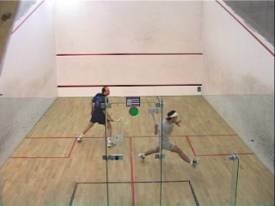
The three photos show the
effects of the power drives, and cross-court shots in the nick area, produced
by the player in the dark shirt. The prime objective is to get the opponent
stretching into the back corners. |
|||||||
|
|
||||||||||
|
Before going further, it
would be best to clarify a point here. Why does the coach advise the player
to first, make sure that he sends his shots onto the back wall, then try to
achieve a perfect length with the power drive, and hitting cross-courts which
die in the back corners? This is to avoid the risk of
hitting the ball too hard but short, or too close to the T. It is easy to
make this error before getting settled into a rhythm. Hence, striking the
ball with a smooth swing, and not too hard, is ideal to achieve accuracy from
the start. Over-hitting the ball to start with would not put the opponent
under pressure, but at least the player would find the time to return to the
T. Once the player feels ready to raise the pace and attack, he should start
looking for the finer details which would stretch his opponent into the back
corners. |
||||||||||
|
|
||||||||||
|
“, even by playing a side-wall boast or drop
shot from the rear court, if the opponent is hanging back. In doing so, the
other player will be stretched to the front. and send him back the whole length of the court. Try
to repeat the pattern and keep the opposition working. When you have volleyed
well to the backcourt, try to |
||||||||||
|
|
||||||||||
|
“So far, everything is going
great for you. Now you can mount even more pressure on the other guy by tctcs tm intr opnt strch hts hard crs crt dly sht thn cr cr tctcs bkhnd wll sim vly drp thn vly bsts tctcs bkhnd wll sim vly drp thn md wll drps tctcs dcptn frm T |
||||||||||
|
|
||||||||||
|
The above advice given by the
coach is very good. However, the coach is taking for granted the idea that
all will go perfectly well like a chain reaction, and that the opponent will
be passive or overwhelmed. This scenario does not consider that the opponent
is probably trying to do the same, or at least can adapt with defensive play
to interrupt the attacker’s assault. A different scenario will be discussed
later, taking these factors into account. For now, let us first indulge in
other details, which will come in handy when the situation is more complex. |
||||||||||
|
||||||||||